The History of Tattoos in Portugal: Art, Culture, and Tradition
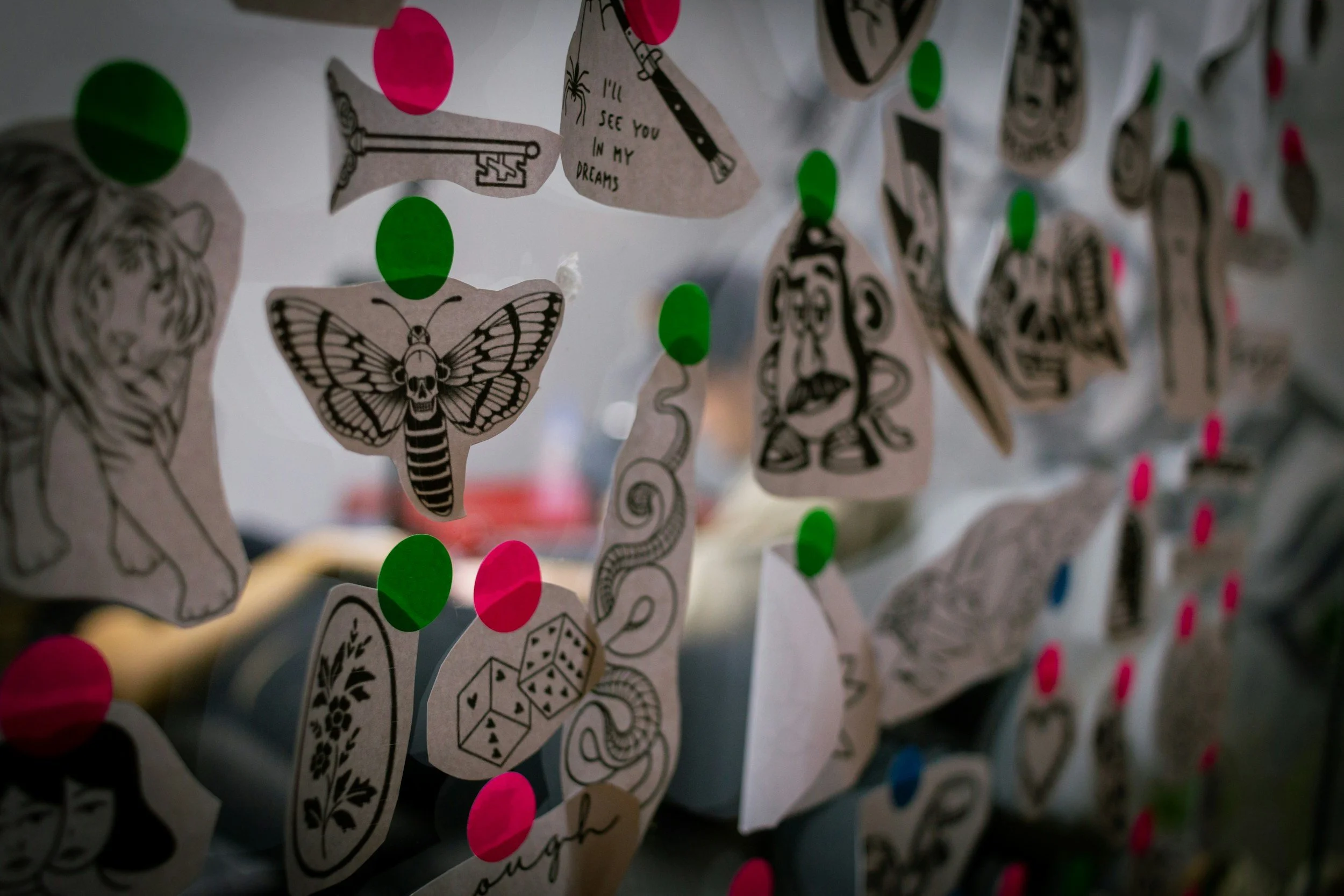
Tattooing is one of the oldest documented art forms in the world — Ötzi the Iceman, found preserved in the Alps in 1991, had 61 tattoos and died around 3300 BCE. Portugal's own relationship with the practice runs deep, surfaces in surprising places, and is woven into the country's maritime history, its Catholic faith, and its complicated twentieth century.
Maritime Beginnings: Tattoos and Portuguese Sailors
Portugal's connection to tattoos is inseparable from its Age of Exploration in the 15th and 16th centuries. Portuguese sailors pushed further than almost anyone — to Brazil, West Africa, the Indian subcontinent, and eventually around the globe. Ferdinand Magellan (Fernão de Magalhães), born in northern Portugal, led the first circumnavigation of the earth between 1519 and 1522.

As they traveled, these sailors encountered indigenous tattooing traditions across Brazil, Africa, and Southeast Asia — cultures where body marking carried deep spiritual and social meaning. Sailors returned with more than spices and maps. Tattoos became a working vocabulary: anchors for stability, ships for the voyages behind them, the Virgin Mary for protection on open water. For the men making the Carreira da Índia — the brutal route from Lisbon to Goa — these were genuine talismans, not decoration. Common designs blended maritime culture with Catholic faith, and that combination never really went away.
The Skin Archive: What Early Portuguese Tattoos Actually Looked Like
In 2017, Lisbon's MUDE design and fashion museum displayed something remarkable: 61 jars of tattooed human skin, collected during autopsies between 1910 and 1940, on loan from Portugal's National Institute of Legal Medicine and Forensic Sciences. The exhibition — "O mais profundo é a pele" ("The deepest thing is skin") — is one of the most specific windows we have into what early Portuguese tattoos actually were.
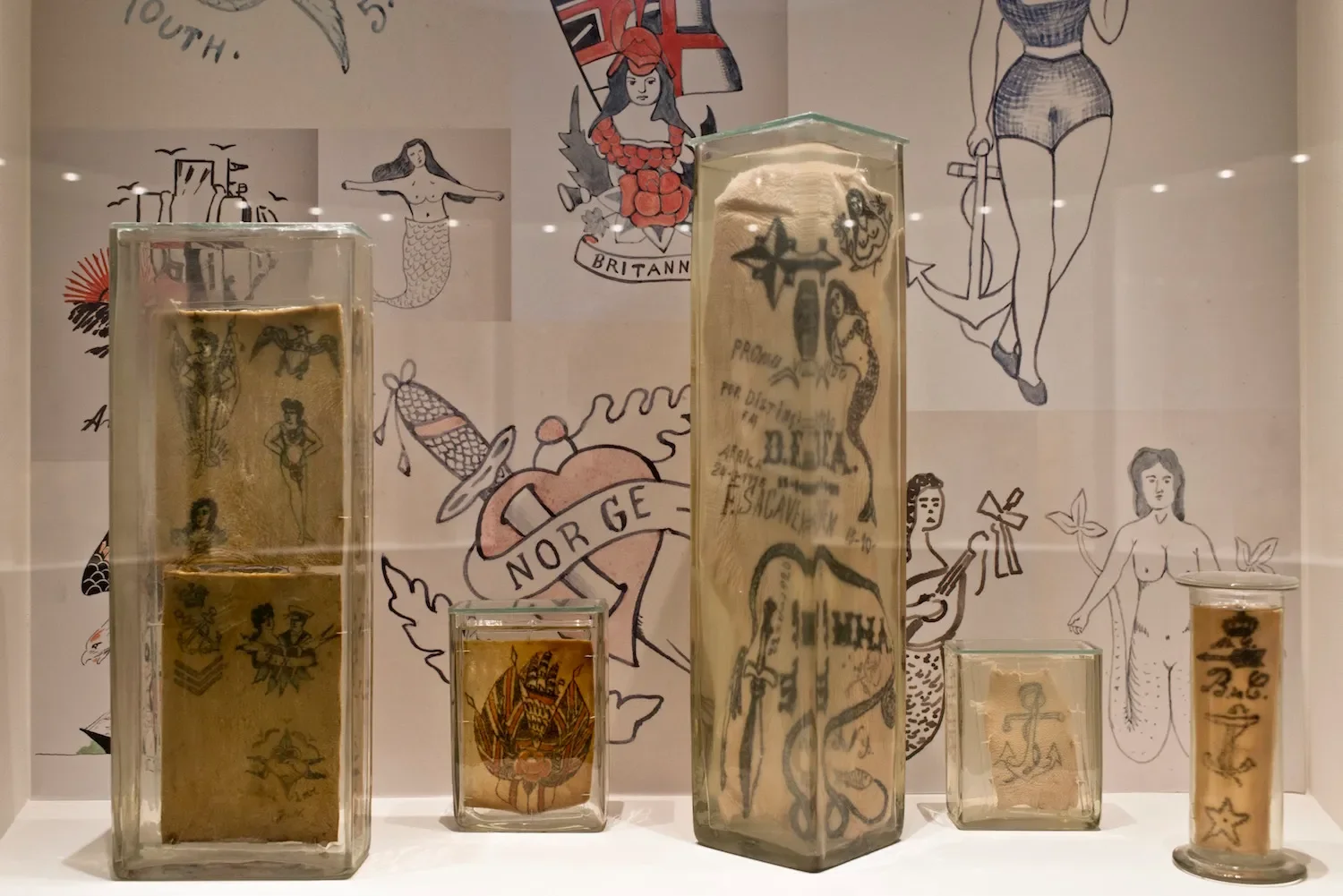
Designs fell into recurring categories: animals, scenes at sea, love, the Portuguese Republic, human faces. Prison inmates burned sheets of paper into ash for black ink and used needles to draw by hand. Religious and erotic imagery appeared side by side, sometimes on the same body. The doctors collecting these samples weren't simply curious about art — they believed tattoos could help identify the "prototype of the criminal." When Salazar's Estado Novo dictatorship took hold from 1932, that academic profiling had obvious political uses.
Tattooing in the 20th Century: A Shift in Perception
For most of the 20th century, tattoos in Portugal stayed on the margins — carried by sailors, soldiers, prisoners, and laborers. The stigma ran deep, reinforced by decades of authoritarian rule that had little tolerance for subculture of any kind.
The Carnation Revolution on April 25, 1974 changed Portugal fundamentally. When the military moved to overthrow the dictatorship, restaurant worker Celeste Caeiro handed red carnations to the soldiers. People placed them in gun muzzles. The revolution was nearly bloodless, and the red carnation became its permanent symbol — representing freedom, peace, and the country's ability to reinvent itself. It's now one of the most requested Portuguese flower tattoos.
As global tattoo culture shifted in the late 20th century, Portugal moved with it. Many Portuguese tattoo artists trained abroad — particularly in the UK and the US, where modern techniques and equipment were more established — and returned with skills that helped build a legitimate, professional industry.
The Modern Era: A Flourishing Tattoo Scene
Today, tattoos in Portugal are mainstream. The stigma of the Estado Novo years has largely faded, replaced by a thriving industry of professional studios and artists working across every style.
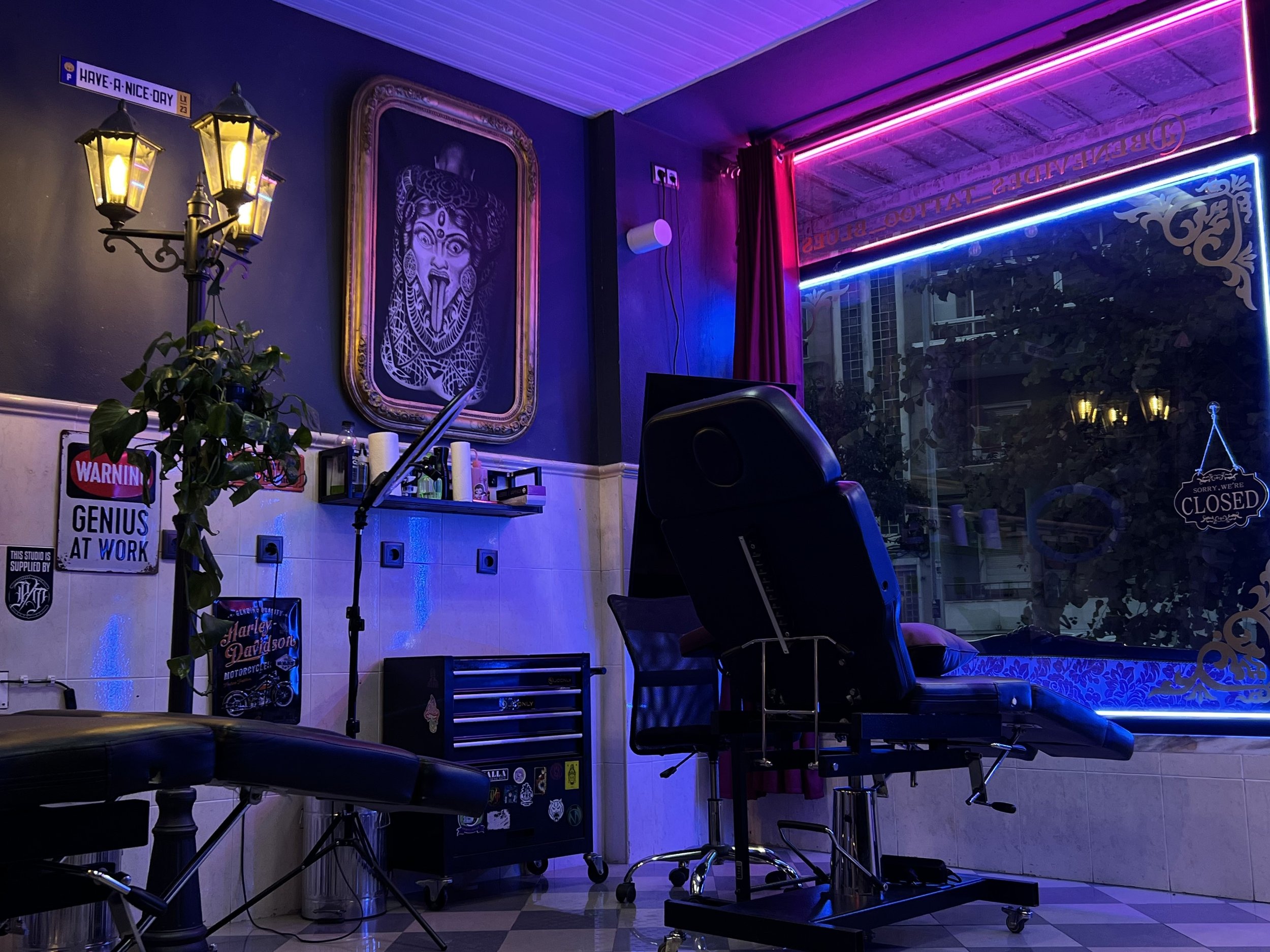
Cities like Lisbon and Porto have become genuine hubs for tattoo culture — with events like the Oporto Tattoo Expo drawing over 400 artists and 6,000 visitors, international guest artists, and a growing international reputation for the quality of the work. Studios such as Cacilhas Tattoo in Almada reflect the evolution of the craft: traditional techniques, contemporary design, and a serious connection to Portuguese cultural identity.
Cultural Influences on Portuguese Tattoo Designs
Portuguese tattooing draws from a deep well of national imagery.
The azulejo tile — blue-and-white, geometric, found on church facades and train stations and the sides of buildings since the 16th century — translates surprisingly well into tattoo work. Maritime symbols remain constant: anchors, compasses, the caravel, Atlantic waves. Catholic imagery runs from the earliest documented tattoos straight to the present — crosses, rosaries, Sacred Hearts, saints, and above all Saint Anthony, Lisbon's patron.
The red carnation, the cravo, has taken on its own chapter in Portuguese tattoo history. Fado — the music recognized by UNESCO as Intangible Cultural Heritage in 2011 — carries its own visual vocabulary into tattoos: the guitarra portuguesa, the black shawl, the rooftops of Alfama. And for those drawn to Portugal's pre-Roman past, designs inspired by the Lusitanians — the tribal confederation that held the land between the Douro and Tagus before Rome arrived, led for years by the warrior Viriathus — have their own following. Portuguese tribal tattoos rooted in that ancient warrior culture are less common but carry real weight.

Tattoos as Tradition and Identity
In Portugal today, tattoos span everything from small, quiet portuguese tattoo ideas — a sardine, a single tile motif, a carnation — to elaborate work pulling together the full sweep of the country's history and symbols. Traditional portuguese tattoos still draw from the same well of maritime and religious imagery that sailors carried in the 1500s, updated in line and style but recognizable in spirit.
The history of tattoos in Portugal is a testament to the country's adaptability and depth. What began as marks on sailors and convicts, studied in jars by doctors who thought they could read character in ink, has grown into a respected and celebrated art form — deeply rooted in Portuguese culture, shaped by five centuries of exploration, faith, revolution, and saudade.
Our tattoo studio in Lisbon area will bring your Portuguese tattoo idea to life. Reach out.